
resources
Beyond Alaska: Discovering the 2nd Largest US State
25 Jul 2025

So, you’re probably wondering about the 2nd largest US state, right? Most people think of Texas, and yeah, it’s big. But Alaska? It’s in a whole different league. Maps just don’t do it justice. I’ve lived in Alaska, and let me tell you, the sheer size of the place is something you feel. It’s not just about square miles; it’s about how far you drive, how high the mountains are, and how much empty space there is. Texas is impressive, no doubt, but when we talk about the truly massive states, Alaska is the one that takes the crown. Let’s break down just how much bigger Alaska is and what that really means.
Key Takeaways
- Alaska is the largest US state by area, significantly larger than Texas.
- Alaska’s land area is more than double that of Texas, meaning Texas could fit inside Alaska more than twice.
- Alaska boasts immense natural features, including numerous mountains, glaciers, and vast national park lands.
- The experience of Alaskan vastness is felt through long travel distances, isolation, and low population density.
- Alaska has coastlines on three oceans and a huge number of lakes and rivers, contributing to its unique geography.
Understanding the Scale: Alaska’s Immense Size
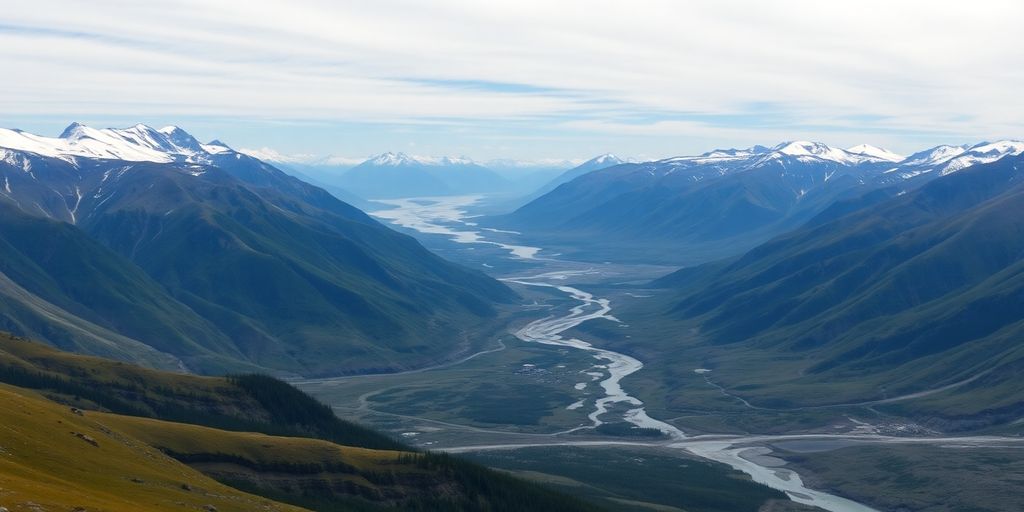
When we talk about the United States, the sheer size of Alaska often gets lost in translation. It’s not just big; it’s on a whole different level. Think about it: Alaska is more than twice the size of Texas, which itself is a pretty massive state. You could actually fit Texas inside Alaska more than two times over. That’s a lot of land. To give you a better idea, Alaska stretches about 2,200 miles from its eastern edge to its westernmost point, and roughly 1,420 miles from north to south. That’s like driving from Miami all the way to Seattle, and then some.
Alaska’s Land Area Compared to Texas
Let’s get down to the numbers. Alaska covers a staggering 665,384 square miles. Texas, on the other hand, comes in at 268,596 square miles. So, when you do the math, Alaska is about 2.5 times larger than Texas. It’s a difference you can really feel when you’re traveling around.
The Vastness of Alaskan Terrain
It’s not just flat land, either. Alaska is packed with geographical wonders. It boasts over 3 million lakes and around 100,000 glaciers. Plus, 17 of the 20 tallest mountain peaks in the U.S. are found here. The terrain is incredibly varied, from icy mountains to dense forests and vast tundra.
Comparing Alaska to Other States
To really grasp Alaska’s scale, consider this: it’s larger than the next two largest states combined. You could fit all 50 states into Alaska and still have room left over. It’s the only state that borders three different bodies of water: the Arctic Ocean, the Pacific Ocean, and the Bering Sea, giving it over 46,600 miles of coastline. Understanding this scale is key to appreciating what makes Alaska so unique.
The sheer amount of space in Alaska means that even simple trips can take a long time. Driving an hour to see a friend isn’t unusual; it’s just part of life when everything is spread out.
Geographical Dimensions: Alaska vs. Texas
When we talk about the sheer size of U.S. states, two names often come up: Alaska and Texas. While Texas is famously large, Alaska is in a league of its own. Let’s break down just how these two giants stack up against each other.
Alaska: The Largest State by Area
Alaska is, without a doubt, the king of U.S. states when it comes to land area. It covers a staggering 663,267 square miles. To give you a sense of scale, if Alaska were its own country, it would rank among the top 20 largest nations globally. It’s a place where distances are measured in hundreds, sometimes thousands, of miles, and the landscape shifts dramatically from icy tundra to dense forests.
Texas: The Lone Star State’s Footprint
Texas, the second-largest state, is certainly no slouch in the size department. It boasts a considerable 268,596 square miles. This is a vast territory, larger than any country in Western Europe. Texas has diverse geography, from the Gulf Coast to the Panhandle plains, and its size contributes to its distinct cultural identity and economic reach.
How Many States Fit Within Alaska?
This is where the comparison really hits home. Alaska’s immense size means you could fit Texas inside it with plenty of room to spare. In fact, Alaska is more than twice the size of Texas. To put it another way, you could fit over two Texases within the borders of Alaska. It’s a mind-boggling thought that highlights the truly colossal nature of America’s northernmost state. If you’re trying to visualize it, imagine laying Texas over a map of Alaska; Texas would only cover a fraction of the total area. It really puts into perspective why understanding the Alaska is the largest U.S. state by area, covering over 665,000 square miles, which is more than double the size of Texas. In contrast, Rhode Island is the smallest state, even smaller than some U.S. cities. is so important when discussing U.S. geography.
The sheer difference in square mileage between Alaska and Texas is hard to grasp without context. It’s not just a little bigger; it’s a fundamentally different scale of territory.
Exploring Alaska’s Natural Wonders
Alaska is a place of truly epic natural beauty, and its sheer scale means you’re constantly encountering something awe-inspiring. It’s not just about big mountains, though those are certainly here. Think about the immense glaciers, the rugged coastlines, and the sheer amount of protected land. It really makes you feel small in the best way possible.
Towering Mountains and Denali’s Majesty
When you talk about Alaska’s mountains, you have to start with Denali. Formerly known as Mount McKinley, this peak is the highest point in North America, soaring to over 20,000 feet. It’s so massive that it often creates its own weather systems. Seeing it on a clear day is something else; it just dominates the horizon. But Denali isn’t the only impressive mountain range. The Alaska Range, the Chugach Mountains, and the Brooks Range all offer dramatic scenery, with jagged peaks, deep valleys, and a sense of raw, untamed wilderness. Many of these areas are pretty remote, making them feel even more special when you do get to experience them. You can get a unique perspective on these landscapes by taking a scenic flight, which really highlights the scale of the mountains and the valleys carved by ancient glaciers. Alaska’s breathtaking landscapes are truly something to behold from above.
Expansive National Park Units
Alaska has a staggering amount of national park land – more than any other state. We’re talking about places like Denali National Park, which is huge and offers incredible wildlife viewing opportunities. You might see grizzly bears, moose, caribou, and Dall sheep just roaming around. Then there’s Wrangell-St. Elias National Park, which is actually larger than Switzerland! It’s a wild place with glaciers, mountains, and very few people. Kenai Fjords National Park, on the other hand, is all about the coast, with glaciers meeting the sea and abundant marine life. These parks protect not just the scenery but also the wildlife and the natural processes that shape them. It’s a testament to the state’s commitment to preserving these wild spaces.
Glaciers and Coastlines
Alaska’s glaciers are a huge part of its identity. Think about the Hubbard Glacier, which is one of the longest tidewater glaciers in the world, or the Mendenhall Glacier near Juneau. These massive rivers of ice are constantly moving, carving out valleys and shaping the land. You can often see them calving, where huge chunks of ice break off and crash into the water, which is a pretty powerful sight. The state also has an incredibly long coastline, stretching for thousands of miles. This coastline is dotted with fjords, islands, and bays, creating habitats for all sorts of marine animals like whales, sea lions, and otters. Exploring these coastal areas, whether by boat or even by plane, gives you a real sense of Alaska’s wild, watery edge.
The Experience of Alaskan Vastness
Perceived Size Beyond Square Miles
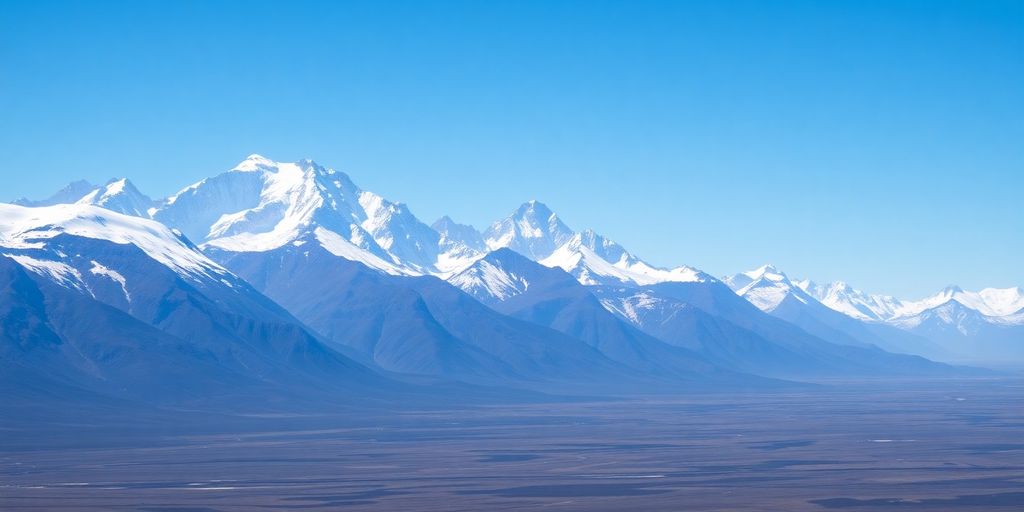
It’s one thing to look at a map and see Alaska’s massive land area, but it’s another thing entirely to actually be there. The sheer scale of the place hits you differently than just numbers on a page. You can drive for hours and see very little change in the landscape, or even see the same mountain range appear closer and then further away, making you question your own sense of distance. It really makes you feel small in the grand scheme of things.
Travel Distances and Isolation
Getting around Alaska is a whole different ballgame compared to the Lower 48. Distances are huge, and sometimes the only practical way to get to remote areas is by small plane. This isn’t just about convenience; it’s about connecting communities that are otherwise cut off. For instance, a trip from Anchorage to Valdez might take a full day by car, covering over 300 miles, but a quick 30-minute scenic flight can offer a breathtaking perspective of the terrain in a fraction of the time. This isolation shapes life here, making supplies and travel a significant consideration for everyone.
Sparse Population Density
When you think about how big Alaska is, the number of people living there is surprisingly small. With a population density of only about 1.3 people per square mile, vast stretches of land are virtually uninhabited. This means you can often go for long periods without seeing another person, especially if you venture off the main roads. It contributes to that feeling of being in a truly wild place, where nature is still very much in charge. It’s a stark contrast to more populated states where you’re rarely far from a town or city.
Alaska’s Unique Geographical Features
Alaska’s geography is truly something else, a wild mix of extremes that sets it apart. It’s not just big; it’s a place where water and land interact in dramatic ways.
Coastlines on Three Oceans
Did you know Alaska touches three different oceans? That’s right – the Arctic, Pacific, and Atlantic Oceans all meet its shores. This massive coastline, stretching over 33,000 miles, is longer than all the other U.S. states combined. It creates a diverse range of environments, from the icy waters of the north to the more temperate seas in the south. This extensive shoreline means a huge variety of marine life and a significant impact on weather patterns across the state. The panhandle, a narrow strip of land, is a significant part of the mainland [387b].
Abundance of Lakes and Rivers
Waterways are everywhere in Alaska. The state boasts an incredible number of lakes – over 3 million, in fact, with more than 100,000 being large enough to be named. Then there are the rivers, carving through the landscape, many of which are only accessible by boat or plane. These rivers are vital for wildlife, transportation, and recreation for the people who live there. Think of the Yukon River, one of the longest in North America, or the Copper River, known for its stunning glacial views.
The Role of the Alaska Gazetteer
Trying to get a handle on all this geography? That’s where the Alaska Gazetteer comes in. It’s basically the official record of all the place names in the state. From mountains and rivers to small towns and glaciers, the gazetteer helps map and identify these features. It’s a pretty important tool for anyone trying to understand the sheer scale and complexity of Alaska’s landscape. It helps make sense of a place where many locations are only reachable by air.
Comparing Alaska and Texas: A Final Verdict
So, we’ve looked at the numbers, the maps, and even talked about what it feels like to be in these massive states. When it comes down to it, the comparison between Alaska and Texas, while often brought up, really only has one clear winner when we talk about sheer size. Alaska is, without a doubt, the undisputed champion of land area in the United States. It’s not just a little bigger; it’s in a league of its own.
Alaska’s Dominance in Land Mass
Let’s get straight to the point: Alaska covers a staggering 663,300 square miles. To put that into perspective, Texas, the second-largest state, comes in at around 268,596 square miles. That means Alaska is more than two and a half times the size of Texas. You could fit Texas into Alaska with room to spare – in fact, you could fit Texas, California, and Montana all within Alaska’s borders and still have space left over. It’s a difference that’s hard to grasp until you’re actually there, experiencing the vast distances.
Texas’s Strengths Beyond Size
Now, this isn’t to say Texas isn’t a big deal. Texas certainly has its own impressive qualities. It boasts a much larger population, a more diverse range of climates across its territory, and a more developed road infrastructure that makes travel generally easier. Texas is a powerhouse in many ways, from its economy to its cultural identity. However, when the conversation is strictly about geographical footprint, Texas simply can’t compete with Alaska’s immense scale.
The 2nd Largest US State: A Clear Distinction
It’s important to clarify that while Texas is indeed the second-largest state, the title of the largest state belongs solely to Alaska. The difference in acreage is so significant that it almost makes the comparison feel a bit unfair. Thinking about Alaska’s size often involves understanding that it’s not just about square miles on a map; it’s about the experience of immense wilderness, long travel times, and a population spread incredibly thin across a colossal landscape. For anyone trying to settle the debate, the numbers speak for themselves: Alaska is the largest, and Texas, while large, is a distant second in terms of land area. If you’re planning a trip or just curious about the scale, getting a detailed map book like the Alaska Gazetteer can really help visualize these differences.
So, Alaska is Bigger, But What Does That Mean?
When we talk about the United States, Alaska is the undisputed heavyweight champion of size. It’s not just a little bit bigger than Texas; it’s more than twice the size, and that difference really shows. You can fit Texas inside Alaska more than two times over, and even then, you’d still have room left. This massive scale means long drives between towns, huge national parks that dwarf entire states, and a feeling of wildness that’s hard to find anywhere else. While Texas has its own impressive features and a much larger population, Alaska’s sheer vastness is something you can’t ignore. It shapes everything from daily life to the incredible natural landscapes you encounter.
Frequently Asked Questions
Is Alaska the largest state in the U.S.?
Yes, Alaska is definitely the biggest state in the U.S. It’s about 665,384 square miles. Texas comes in second with about 268,596 square miles, and California is third.
How many states can fit inside Alaska?
Alaska is so huge that you could fit about 19 other U.S. states inside it! Think about combining Texas, California, and Montana; Alaska is still bigger than all of them put together.
How many square miles is Alaska compared to Texas?
Alaska covers around 663,300 square miles, which is more than double the size of Texas, at about 268,596 square miles. You could fit Texas into Alaska more than two times!
Which is the second largest U.S. state?
Alaska is the largest state by far. Texas is the second largest. So, Alaska is clearly the biggest, and Texas is the second biggest.
What are some of Alaska’s natural wonders?
Alaska has amazing natural sights like Denali, North America’s tallest mountain, and huge national parks like Wrangell-St. Elias, which is bigger than some entire states. It also has tons of glaciers and beautiful coastlines.
Why does Alaska feel so much bigger than other states?
Alaska feels incredibly vast because of its huge distances between towns, very few people spread out over a large area, and the sheer size of its mountains and parks. Even a short trip can feel like a long journey.


